Introduction The List—and How We Came Up with It
The Top 100 Romance Novels
16 Lighthouse Road by Debbie Macomber
All Through the Night by Connie Brockway
Almost Eden by Dorothy Garlock
Along Came a Duke by Elizabeth Boyle
Bait by Karen Robards
Bet Me by Jennifer Crusie
Blue Heaven, Black Night by Shannon Drake
Breaking the Rules by Suzanne Brockmann
Bride of Pendorric by Victoria Holt
Captive Bride by Johanna Lindsey
Carolina Moon by Nora Roberts
Chance McCall by Sharon Sala
Chasing Perfect by Susan Mallery
Convenient Marriage, The by Georgette Heyer
Cove, The by Catherine Coulter
Dark Lover by J. R. Ward
Dark Possession by Christine Feehan
Devil in the Junior League, The by Linda Francis Lee
Devil May Cry by Sherrilyn Kenyon
Devil’s Bride by Stephanie Laurens
Dreaming of You by Lisa Kleypas
Duke of Her Own, A by Eloisa James
Emma by Jane Austen
Faking It by Jennifer Crusie
Macmillan Collocations Dictionary For Learners Of English Book
Share
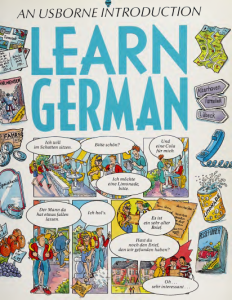
German Speaking Countries
Jun 12, 2018 · The majority of these individuals live in Germany (78.3%), followed by Austria (8.4%), Switzerland ...
Rank
Country
Population 2014/2015
Speakers (native)
Speakers (second)
1
Germany
81,083,600
74,430,000 (91.8%)
5,600,000 (6.9%)
2
Belgium
11,245,629
73,000 (0.6%)
2,472,746 (22%)
3
Austria
8,602,112
7,999,964 (93%)
516,000 (6%)
4
Switzerland
8,256,000
5,329,393 (64.6%)
395,000 (5%)
Using the Macmillan Collocations Dictionary in IELTS Sam McCarter TheMacmillan Collocations Dictionary(MCD) is a valuable resource for anyone using English in an academic or professional context. It shows how the most frequent words in English typically combine with each other, and with other words, to form natural-sounding chunks of language – and this is what makes it an especially useful tool for people taking the IELTS exams. There is an important distinction to be made between IELTS (the International English Language Testing System) and other exams. The purpose of IELTS is not to to test students’knowledgeof the English language, but to assess theircompetencein using it. Students are not awarded a pass or fail, but their scores are reported on a scale ranging from 1 (‘Non-User’) to 9 (‘Expert User’). The wordUseris critical. Rather than testing students’ knowledge of grammar or of specific vocabulary items, IELTS evaluates their ability to use the English language in the completion of tasks (within fairly tight time limits) in the four main skills of Listening, Reading, Writing and Speaking. This focus on testingcompetencerather thanknowledgehas implications for students and teachers alike, especially with regard to learning vocabulary. Let us take, for example, a student who is about to take IELTS, and who has a reasonably large vocabulary, say of around 7,500 words. A vocabulary of this size is a desirable asset for anyone aiming to achieve a score of 6.5–7 in the academic version of IELTS. But learning words from vocabulary lists is not enough. If our imaginary student has no awareness of how words work naturally together, s/he will be at a disadvantage compared to someone who may have a smaller vocabulary (say 5,000 words), but who is able to use those words effectively by combining them in natural-sounding collocations.. What this illustrates is the importance of learning tousevocabulary, at speed, across tasks within the four main skills. This will improve fluency, clarity of expression, and naturalness – and hence competence in general. The need for such flexibility in manipulating words to create the kinds of combination that a fluent speaker would produce naturally is what makes theMacmillan Collocations Dictionaryan ideal companion for students as they prepare for the IELTS exam. How producing natural collocations can help IELTS students There are two aspects of vocabulary that illustrate the relevance of collocation and the value of a dictionary like the MCD: •the relationship between frequency and ‘coverage’: research shows that the most common English words make up a high percentage of everything we read or write. The most frequently used words (the top 2,500) account for almost 80% of all text, while the 7,500 most common words make up over 90%. •The relationship between frequency and collocation: the more frequent a word is, the more likely it is to enter into ‘partnerships’ with other words, forming combinations which convey a sense of naturalness and style. This has implications forprocessing informationin the four main skills tested in IELTShttps://content.fimsschools.com/ebooks/English%20Language%20Books/Macmillan%20Collocations%20Dictionary%20For%20Learners%20Of%20English%20Book.pdf
It is the official language in Germany, Austria and Liechtenstein and one of the official languages in Switzerland and Luxembourg. German ranks 11th in the list of the most widely spoken languages in the world. 2. The German language has three genders